
Reconnect with Yourself.
Restore Your Energy.
Practical tools, thoughtful articles, and guided resources
to help you feel calmer, clearer, and more connected to yourself.
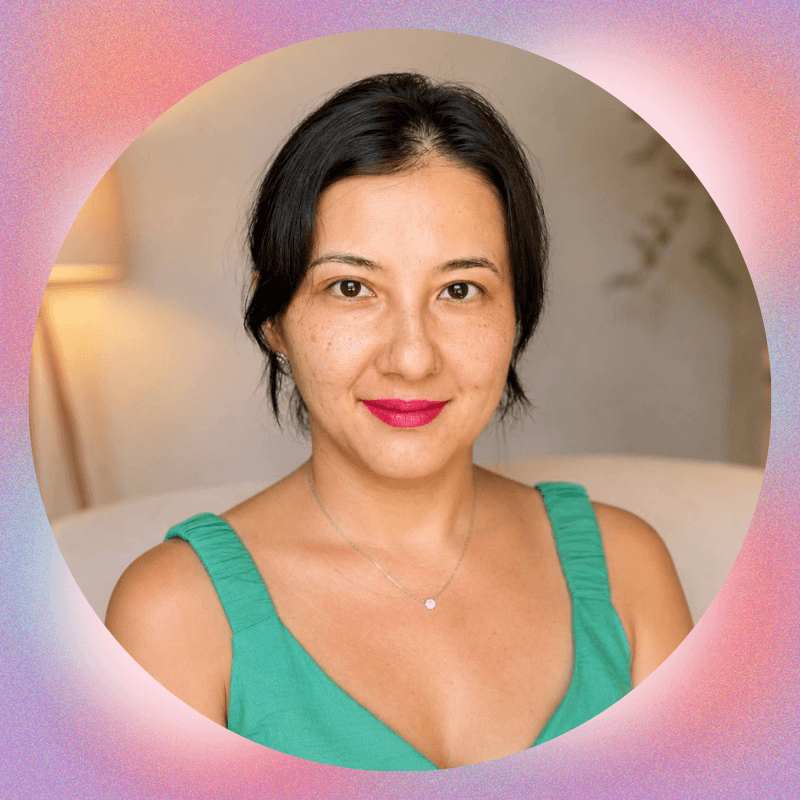
Hi, I'm Yuliya Soldatova, Ia life coach who helps women reconnect with themselves, gain clarity, and move forward with confidence. Through coaching, self-reflection practices, metaphorical cards, karmic numerology, and astrology, I create gentle yet practical tools for deeper self-understanding and meaningful change.
I have nearly 10 years of experience working with people, more than 3,000 hours of consultations in numerology and astrology, and over 100 facilitated transformational games. I am also the creator of three original transformational tools: Flow of Life, My Authenticity, and Chakra Diagnosis.
Do You Need Rest, a Boundary, or a Life Change? How to Tell the Difference
You feel tired, unmotivated, or emotionally disconnected.
Your first thought may be: “I just need to rest.”
So you sleep longer, cancel plans, spend a quiet weekend at home, or take a break from work. Sometimes this helps. But sometimes Monday arrives and the same heaviness returns almost immediately. That is because not every form of exhaustion is caused by a lack of sleep. Sometimes you need physical or emotional rest. Sometimes you need a boundary. And sometimes the life you are trying to recover from is no longer the life you want to continue living in the same way.
These situations can feel similar, but they require very different responses. Rest cannot solve a repeated violation of your boundaries. A boundary cannot make an unsuitable life direction meaningful. And a major life change may not be necessary when your body simply needs recovery.
The following questions can help you understand what your exhaustion may actually be asking for.
When You Probably Need Rest

Rest is most likely the answer when your current life still feels meaningful, but you no longer have enough energy to participate in it fully.
You may still care about your work, relationships, plans, and responsibilities. You simply feel depleted.
Common signs
Your usual activities still matter to you, but they feel harder than normal.
You become more irritable when you have not slept or had time alone.
A quiet day genuinely improves your mood.
You feel better after reducing stimulation.
Your motivation begins to return after recovery.
You do not necessarily want a different life—you want more energy for the life you already have.
Ask yourself
When did I last feel properly rested?
What type of exhaustion am I experiencing: physical, mental, emotional, social, or creative?
What usually helps me feel more like myself?
What can I temporarily pause without creating a larger problem?
What kind of rest would actually restore me?
Rest may mean sleep, but it can also mean silence, movement, time in nature, creative activity, reduced decision-making, or a break from being available to everyone.
The important question is not simply: “How can I stop working?”
It is: “What would help my system feel restored?”
When You Probably Need a Boundary

You may need a boundary when your energy improves during rest but disappears again as soon as you return to a particular person, responsibility, or situation.
The problem is not that you are incapable of handling life.
The problem may be that too much is being asked of you—or that you keep agreeing to things that cost more than you can sustainably give.
Common signs
You feel resentment after saying yes.
Certain people leave you consistently tense or depleted.
You regularly sacrifice your plans to meet someone else’s needs.
You feel responsible for preventing other people’s disappointment.
Your time rarely feels like your own.
You repeatedly think, “I don’t want to do this,” but do it anyway.
Rest helps only until the same demand appears again.
Ask yourself
Where am I agreeing out of guilt?
Which responsibility feels heavier every time I think about it?
What am I doing because I am afraid of someone’s reaction?
Which expectation have I never consciously agreed to?
What would become easier if I said no, asked for help, or changed the terms?
A boundary does not always mean ending a relationship or refusing everything.
It may mean:
changing how often you are available;
asking another person to share responsibility;
no longer answering messages immediately;
declining a request without a long explanation;
limiting the time you spend in a draining environment;
stating clearly what you can and cannot offer.
A useful boundary protects your energy without requiring you to become cold or disconnected.
When You May Need a Life Change

A life change may be necessary when rest does not restore your interest and boundaries do not resolve the deeper dissatisfaction.
You may have enough time and space, yet still feel that something essential is missing.
The issue may not be the amount you are doing.
It may be the direction in which your energy is going.
Common signs
You repeatedly imagine living differently.
Your current goals no longer feel meaningful.
You feel disconnected from the identity you have built.
You have been waiting for motivation to return, but it does not.
You feel relief—not only fear—when you imagine changing direction.
The same dissatisfaction continues across different moods and seasons.
You are functioning well externally but feel absent from your own life.
You no longer recognize yourself in your daily choices.
Ask yourself
What part of my life no longer reflects who I am?
What have I outgrown but continued maintaining?
What would I choose differently if I were creating my life today?
What do I want that I keep dismissing as unrealistic or selfish?
Am I exhausted by doing too much—or by doing too much of what no longer feels right?
What truth keeps returning, even after I try to ignore it?
A life change does not always require an immediate dramatic decision.
It may begin with a smaller experiment:
exploring a new professional direction;
reducing one commitment;
returning to an abandoned interest;
having an honest conversation;
changing your weekly routine;
creating more personal space;
testing a new idea before making a permanent choice.
Clarity often develops through experience, not endless analysis.
The Difference Between Rest, Boundaries, and Change

Use this simple distinction:
You may need rest when:
“I still want this, but I do not currently have the energy for it.”
You may need a boundary when:
“I could manage this, but the current conditions are costing me too much.”
You may need a life change when:
“Even under better conditions, this no longer feels right for me.”
More than one answer can be true.
You may need rest before you can identify the boundary.
You may need a boundary before you can see whether the situation is still right for you.
You may need a small life change rather than a complete reinvention.
The goal is not to label your situation perfectly.
The goal is to respond to the real problem rather than repeatedly using the wrong solution.
A Simple Three-Column Exercise

Take a blank page and create three columns.
Column One: What Rest Might Change
Write down what could improve if you had more sleep, quiet, recovery, help, or time without demands.
Column Two: What a Boundary Might Change
List the situations that would feel different if you said no, asked for support, reduced access, or changed an agreement.
Column Three: What May Need a Deeper Change
Write down what would still feel wrong even if you were well-rested and fully supported.
Then complete these sentences:
What my body needs is…
What my boundaries need is…
What my life may be asking me to reconsider is…
The smallest honest step I can take is…
Do not force yourself to make a major decision immediately.
Start by identifying which part of your experience needs attention.
You May Not Need to Fix Everything

When you feel emotionally exhausted, every part of life can begin to look like a problem.
But the solution may be more specific than it first appears.
You may need one genuinely restorative weekend.
You may need to stop agreeing to a responsibility that should never have belonged entirely to you.
Or you may need to acknowledge that a particular chapter has reached its natural end.
You do not have to solve your entire life today.
You only need to respond honestly to what your exhaustion is trying to tell you.
Continue Your Reflection

My Life Right Now is a printable guided self-reflection toolkit created to help you examine your current situation from several perspectives.
Through metaphorical cards, coaching questions, a structured session mat, and reflection exercises, you can explore what is draining you, what needs to change, which resources are already available to you, and what your next meaningful step may be.
It is not about making a rushed decision.
It is about seeing your present clearly enough to respond with intention.
Author:
Yuliya Soldatova






TRENDS
7 Self-Reflection Questions to Ask When You Feel Stuck in Life
Seven questions to help you find clarity again.
Quis nostrud exercitation ullamco..
Incididunt ut labore et dolore magna aliqua..

ABOUT ME
I’m Yuliya Soldatova, a life coach helping women gain clarity, reconnect with themselves, and create meaningful change through reflection, coaching, and practical self-discovery tools such as transformation games, metaphorical cards, numerology etc.